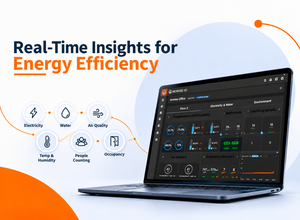
Many smart building projects start with a long list of sensors. But more sensors do not save energy. Clear data does. And clear data needs one place where everything comes together.
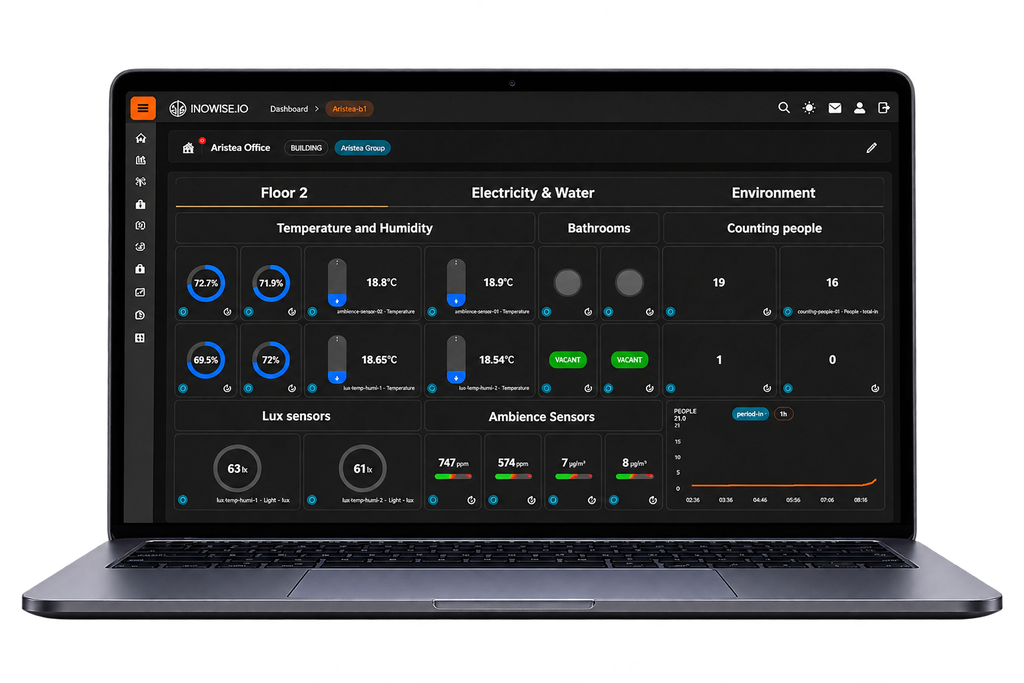
That is the idea behind a new proof of concept with a Facility Management company in Oporto. The goal is simple: show how INOWISE.IO can monitor different building systems from one central platform, without replacing the infrastructure that is already there.
The challenge: many systems, no common view
Buildings use different devices from different manufacturers. Electricity, water, air quality and occupancy are often tracked in separate tools, or not tracked at all. This makes it hard to see where energy is wasted.
Facility managers need to answer simple questions:
- Where is electricity used, and when?
- Is water consumption normal?
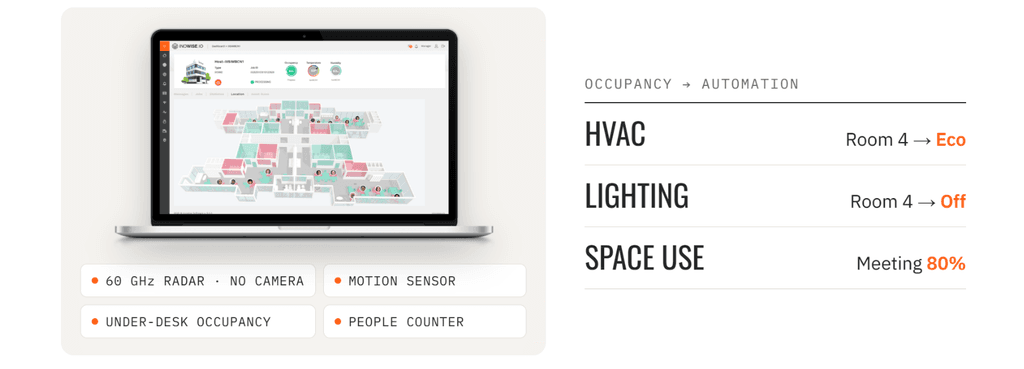
- Are rooms heated, cooled and lit when nobody is there?
- Is the air quality good for the people inside?
The setup: one platform, many sensor types
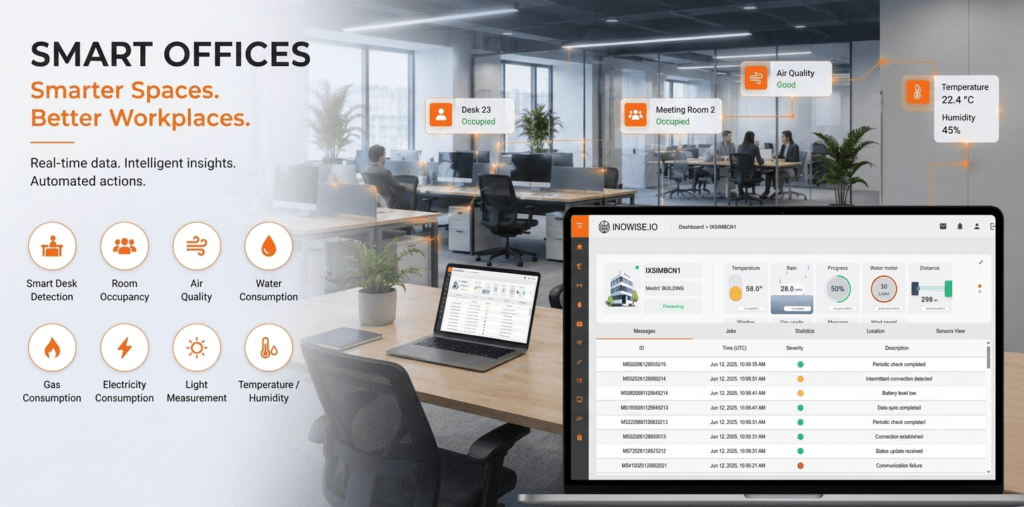
For the project, INOWISE.IO connects a mix of sensors and one gateway. Together they cover the main areas of smart building IoT and energy monitoring:
- Electricity: the SDM530-LR three-phase energy meter (up to 100 A) is wired into the electrical panel and measures power consumption over LoRaWAN.
- Water: the EM300-DI pulse counter connects to the existing water meter by a signal cable and reads its pulses. It runs on a battery.
- Indoor air quality: two AM319-868M-O3 wall sensors measure indoor air quality, including ozone (O3).
- Temperature, humidity and light: two LHT65N-E5 sensors measure temperature and humidity. An external probe measures light. They run on batteries.
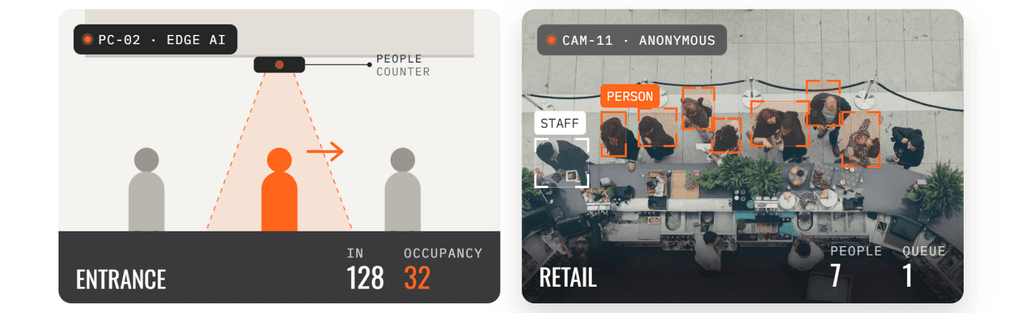
- People counting: a VS135-868M ceiling sensor counts people entering and leaving an area.
- Bathroom occupancy: two VS330 sensors show when bathrooms are in use. They run on batteries.
- Gateway: one UG65-868M-EA gateway receives the data from all sensors and sends it to the platform.
- People counter (12 VDC) and the air quality sensors (5 V via USB-C). These are the only ones that nead nearby power supply.
All field devices use LoRaWAN EU868. The EM300-DI needs only a low-voltage signal cable to the water meter, with no mains power.
No client Wi-Fi needed
This is a key point for the client. The sensors do not use the client’s Wi-Fi. They send their data by LoRaWAN to a single gateway. Only this gateway needs power and an Internet connection. Power over Ethernet is preferred, because it brings power and network through one cable.
The result is a small installation effort:
- Battery sensors need no electrical work.
- Only a few devices need a nearby power supply.
- The electricity meter is the only device that needs a qualified electrician.
- The existing building systems stay in place.
From raw data to energy savings
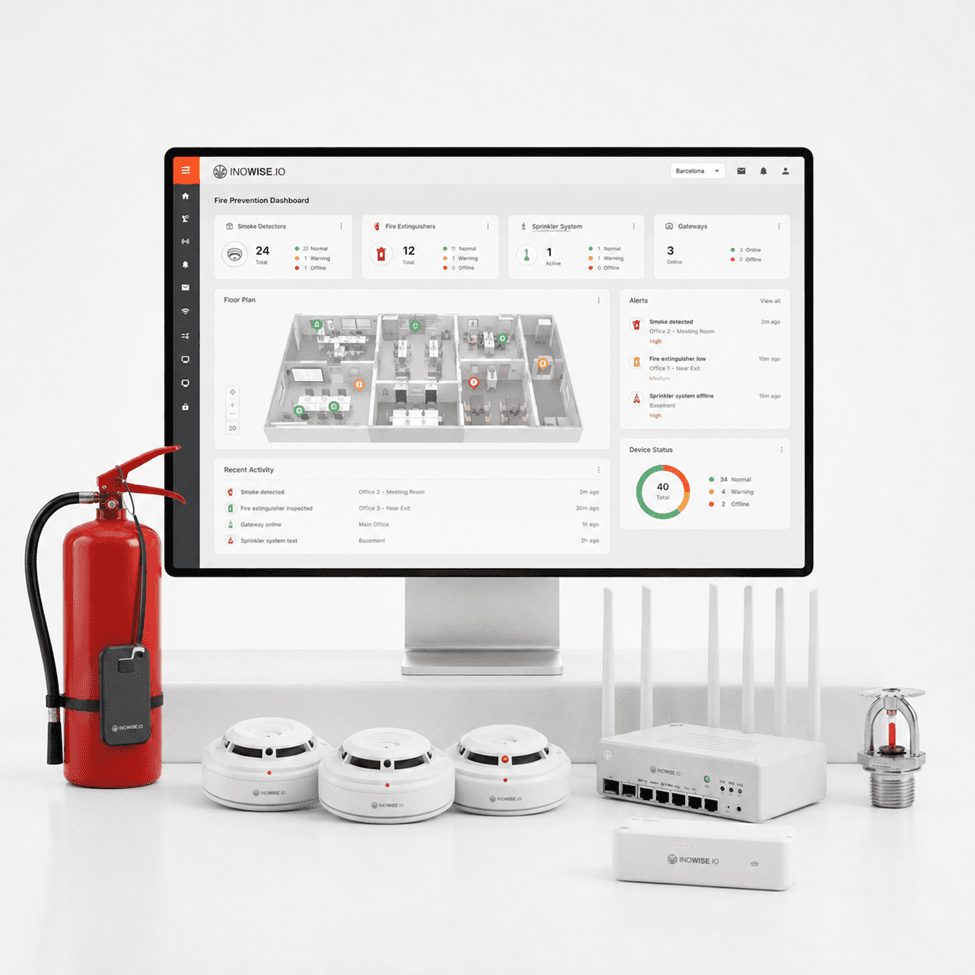
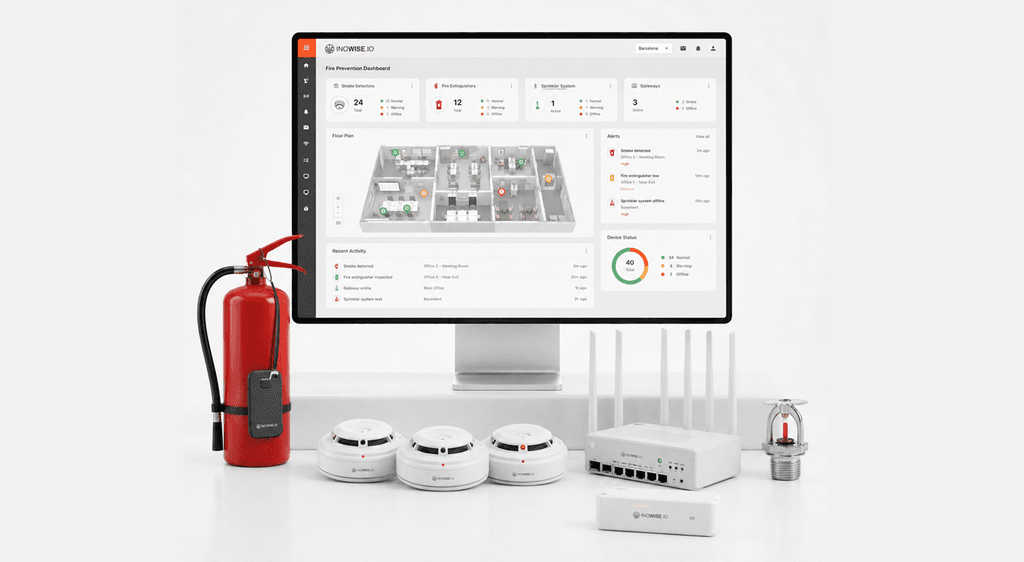
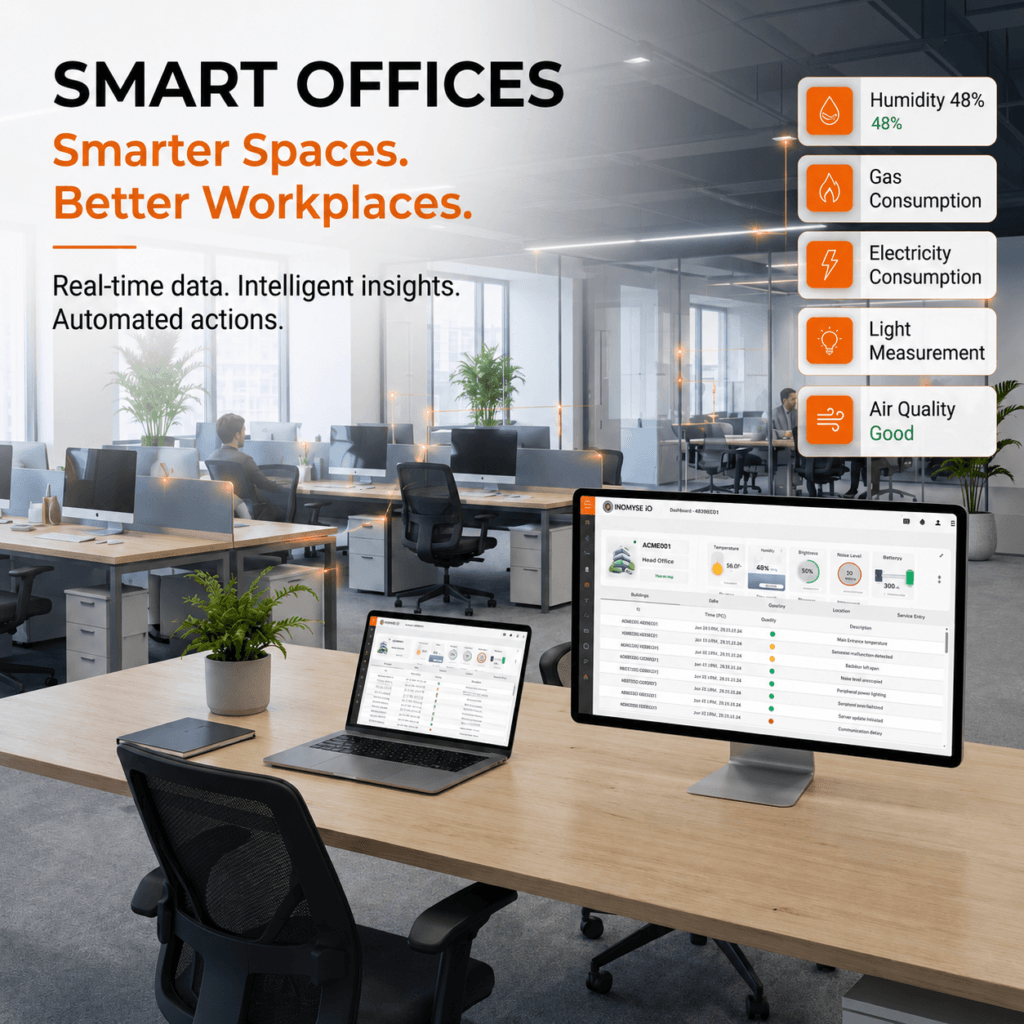
Sensors alone only produce numbers. The value comes from what the platform does with them. With INOWISE.IO, data from all devices appears in one dashboard. Facility managers can:
- Identify energy waste. Real-time data shows unusual consumption of electricity or water, such as use outside working hours or a possible leak.
- Use space data. People counting and occupancy data show which areas are really used.
- Automate. The INOWISE.IO Rule Engine can send alerts, create maintenance tickets, or reduce heating, cooling and lighting in unused rooms.
- Protect comfort and health. Alerts tell the team when air quality, temperature or humidity leave the accepted range.
- Report. Historical trends support sustainability and compliance reporting.
Open by design
A smart building project should not lock you into one manufacturer. INOWISE.IO supports LoRaWAN, NB-IoT, EnOcean, Bluetooth Low Energy, IP500 and MQTT. A REST API sends data to systems you already use, such as building management or maintenance software. Data is hosted on dedicated servers in the EU and follows GDPR. Access is controlled by user roles.
The architecture has four simple layers: sense, connect, analyze, act.
Start small, grow later
This proof of concept starts with a defined set of sensors and one gateway. The platform scales from a single building to a whole network of sites. More sensors, more buildings and more use cases, such as indoor tracking with Bluetooth beacons, can be added later on the same platform.
Conclusion
Energy efficiency does not come from the number of sensors. It comes from seeing the right data in one place and acting on it. This project in Oporto shows that a Facility Management company can get this view quickly, with minimal installation work and without replacing existing infrastructure.